It's Not Easy, but Change is Always Possible
What happens when everything looks right from the outside, and on the inside you're sure the problem is you?
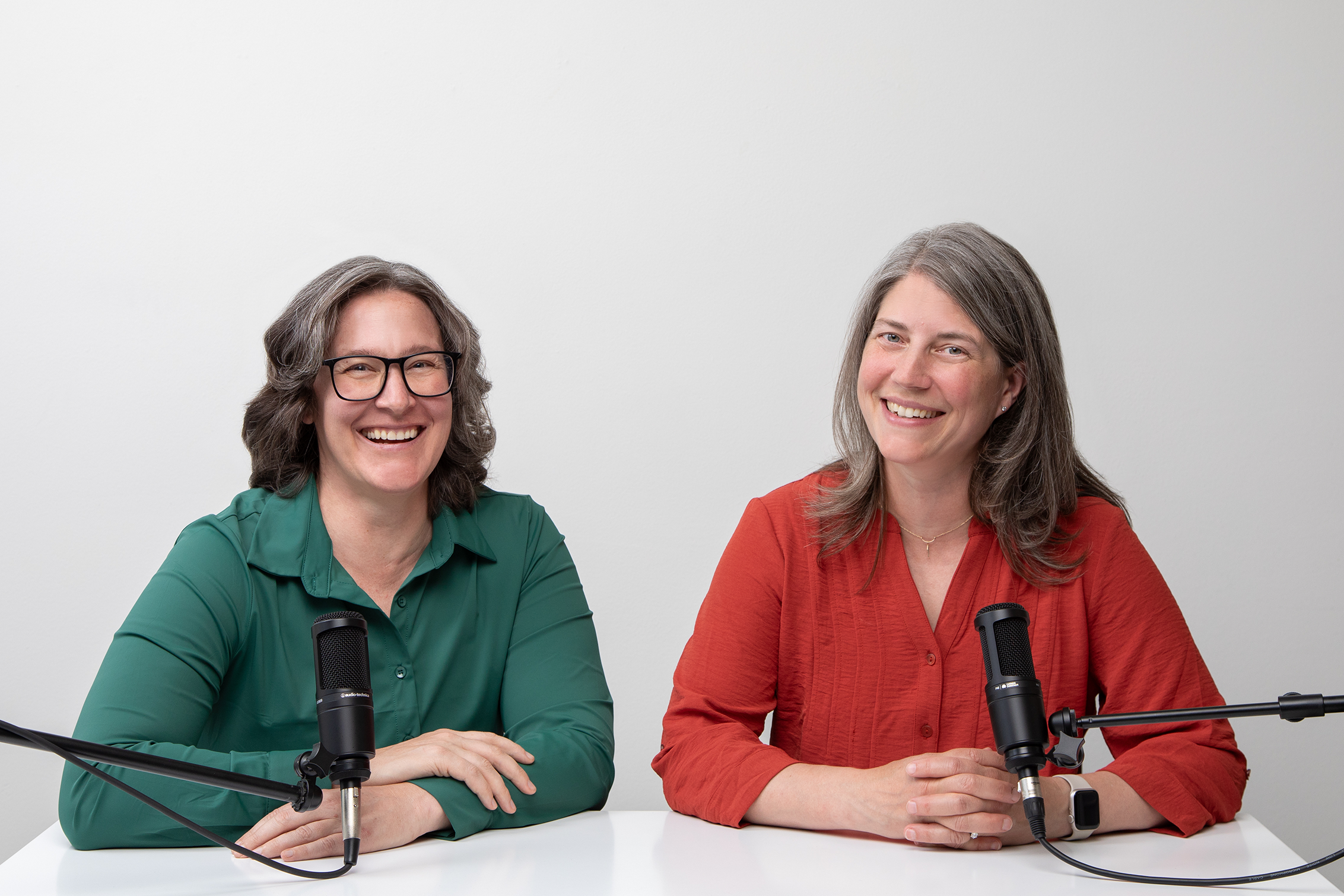
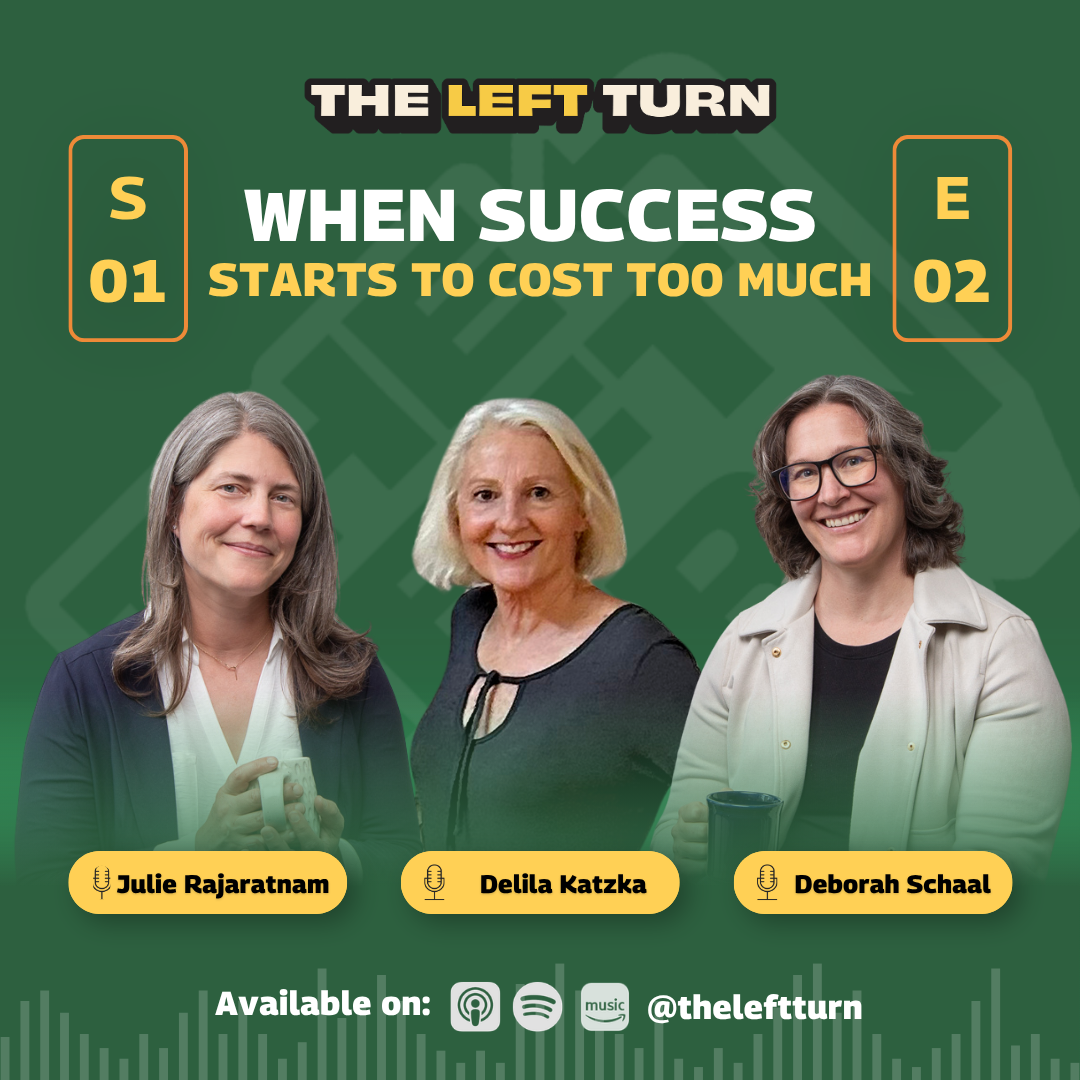
In the first episode of The Left Turn, co-hosts Deborah Schaal and Julie Rajaratnam explain why they started the show and how it works. Then they answer the questions they ask every guest.
Julie was a rising leader at a global health nonprofit. Deb spent years in corporate continuous improvement. Both took a leave of absence before they made their change. Both came to believe the difficulty meant something was wrong with them.
Take Two
If you heard this episode during our soft launch, it may sound different now. That's because it is. Our first recording sounded scripted, and our early listeners were honest enough to say so. Deb has spent a career in continuous improvement, and Julie coaches people through change, so we did the obvious thing: we took the feedback, put the script away, and re-recorded within a week. This version is less polished and a lot more like us.
Meet Deborah and Julie
Julie has a PhD in public health. She led monitoring and evaluation for a nonprofit, managing a team based largely in the United States that supported work in Sub-Saharan Africa, India, and Southeast Asia. Today she works for herself as a consultant and coach.
Deborah studied science, then earned her Master Black Belt in Lean Six Sigma, which let her work across many different industries. After years in corporate roles, she moved her family to Costa Rica, began consulting, and wrote a book, Lazy Systems.
Soon after they met, Deb asked Julie whether she wanted to write a book together. That book, built from the stories of people who have made left turns, is where this podcast began. Every guest first sits for a research interview with a standard set of questions. The podcast conversation pulls out what listeners might benefit from hearing.
"I Must Be Failing"
Julie was getting a lot of positive feedback about how she was showing up as a leader, and, in her words, "feeling completely the opposite."
Every year brought the same "hand-wringing exercise": is my team going to make it? Are we all going to be able to keep our jobs? That stole the time and energy she needed to make the organizational change she believed in. The dissonance, she says, was "causing me so much unrest in my body."
She concluded the problem was her: "I must be failing because it's not changing."
She took a leave of absence and decided to leave the organization. That was February 2020. In March, COVID shut everything down, and her job carried the health benefits that covered her family. She went back.
The next three years became their own left turn. Julie returned with a different goal: building the capacity of her function in the countries where the programs ran. Her team shared that goal. It became the foundation she could hand off to someone else, and her way to her own exit.
"I Thought Something Was Wrong with Me"
Deb's work was problem solving: find the root cause and fix it. It was empowering. She started doing it on herself too. Time management. Efficiency. Productivity.
When leadership changes killed the momentum of a team she had put so much into, she looked into starting her own business. "The seed was planted, but I wasn't ready." She took another corporate job instead and stayed on the path that came with promotions and money, telling herself she wasn't a salesperson.
Eventually she had to take a leave. She was trying to be efficient at home and at work, and there were too many demands. "My toolbox of productivity hacks, I ran out."
Her family sold everything and moved to Costa Rica, where a friend opened the door to consulting. Back in the United States, with her consulting work slowing down, she wrote Lazy Systems to hold on to what she had learned about herself. She calls it "a bit of a confessional," and says that having so much of herself in it "feels almost too vulnerable now."
What It Cost, and What Made It Possible
For Deb, the unexpected cost was uncertainty. "My job was change. So I always thought I was good at change. But the level of uncertainty that I've gone through in this process is more than I'm comfortable with."
For Julie, it was the team. "I miss having a team."
What made the change possible was practical and hopeful at once. Deb points to understanding your financial runway and setting the change up as an experiment. Julie had her partner's income to lean on, until her partner was laid off four months after she started on her own. She said yes to everything that year, "probably too many things," and learned to treat obstacles as growth edges.
It's Not Easy, but Change is Always Possible
Asked what she'd tell someone who knows something is off but isn't ready to move, Julie thinks back to the version of herself breaking down in tears at work: "I would want that person to know there are other possibilities out there." For her, seeing them took stepping away, working on her own nervous system, and giving her mind space to wander.
Deb describes that space as a pause between the person you were and the person you're becoming, with enough time to recognize the patterns. And community: "It's much easier when you're not alone."
Julie tells her kids that change is always possible. "It's not easy, but it's always possible."
Which leaves an open question:
What becomes possible when you stop assuming the problem is you?
Listen
Listen to Deborah and Julie's full conversation on The Left Turn.
[Spotify, Apple Podcasts, Amazon Music]
Mentioned in this episode
Lazy Systems: A Practical Philosophy for Building Systems That Breathe, by Deborah Schaal: https://a.co/d/04O0Belh
Invitation
Interested in being a guest? Or know someone who might be? Send them this link. Reach out.


Stay connected to new conversations